Trip guide
Abu Dabbab or Samadai? Choosing Your Marsa Alam Snorkeling Trip
· 9 min read · Lina Paoli, Marketing Manager
The short answer
If you want the best chance of swimming near wild dolphins, go to Samadai Reef — the place almost everyone means when they say Dolphin House. If you want a calmer, shallower day with a real chance of seeing green turtles and possibly a dugong, go to Abu Dabbab.
They are genuinely different days out, not two versions of the same trip. Samadai is a boat day at an offshore reef. Abu Dabbab is a sheltered bay you enter from the beach. Below is what that difference actually feels like, so you can pick without guessing.
- Want dolphins above all else → Samadai (Dolphin House)
- Want turtles, calm shallow water, easier snorkeling → Abu Dabbab
- Nervous swimmer or travelling with young children → Abu Dabbab
- Have two spare days → do both, and put Samadai first
What Samadai Reef actually is
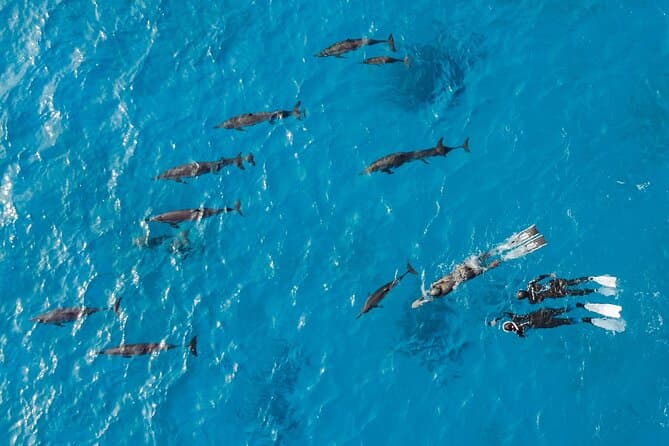
Samadai is a horseshoe-shaped reef roughly 15 km offshore from Marsa Alam. A resident pod of spinner dolphins uses the sheltered inner lagoon as a resting area during the day, which is exactly why the site exists as a destination — and exactly why it is regulated.
Samadai has been a protected area since 2004. The lagoon is zoned: boats moor in a designated area, part of the reef is closed to visitors entirely, and swimmers are kept out of the dolphins' core resting zone. That regulation is the reason the dolphins still come. Any operator promising you unrestricted access to the pod is either misleading you or breaking the rules.
In practice this means you snorkel the reef and the outer lagoon, and the dolphins move through on their own terms. When they do, it is genuinely remarkable. When they don't, you have still spent the day on a spectacular reef.
What Abu Dabbab actually is
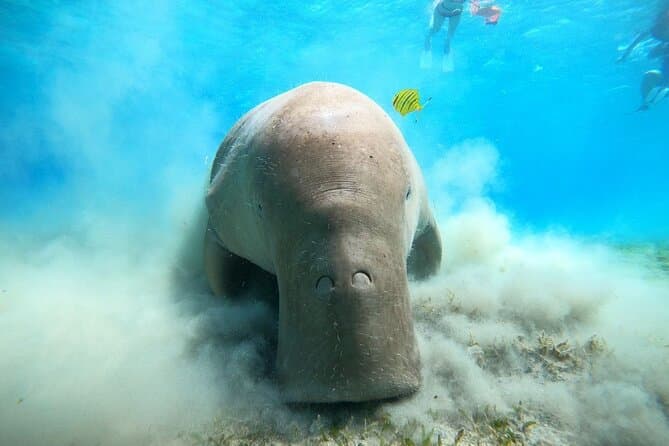
Abu Dabbab is a wide, shallow bay about 30 minutes north of Marsa Alam by road. Its seagrass meadow is the draw: seagrass is what dugongs eat, and it is also grazing ground for green turtles.
Because you enter from the beach into waist-deep water that shelves very gradually, Abu Dabbab is the more forgiving of the two by a wide margin. There is no boat crossing, no deep water entry, and no current to speak of on a normal day. It is the trip we recommend to people who tell us they haven't snorkeled before.
The trade-off is that it is a bay, not a reef wall — the coral is less dramatic than Samadai's. You come here for the animals in the seagrass, not for the reef architecture.
What you will realistically see
This is where honest expectations matter more than marketing, so here is how it actually goes across a season.
Dolphins at Samadai are seen on most trips but never all of them. They are wild animals using the lagoon on their own schedule; some days they are there at dawn and gone by ten, some days they stay. Anyone quoting you a guaranteed percentage is inventing it.
Turtles at Abu Dabbab are close to reliable. The bay has resident green turtles that feed in the seagrass daily, and on a normal day most guests see at least one, often at close range while it grazes.
Dugongs at Abu Dabbab are the genuine long shot. They are solitary, shy, and there are very few of them. Seeing one is a real event, not a scheduled part of the day. Book Abu Dabbab for the turtles and the calm water, and treat a dugong as a bonus — that way the day is good either way.
- Samadai: dolphins frequent but never guaranteed; excellent reef regardless
- Abu Dabbab: green turtles very likely; dugong genuinely rare
- Neither site permits touching, chasing or blocking an animal's path
How the two days compare
The practical shape of the day is often what decides it for people, more than the wildlife.
Samadai is a full boat day — pickup around 07:00, roughly 45 minutes at sea each way, two snorkeling stops, lunch on board, back at your hotel late afternoon. You are on a boat for most of it. If you are prone to seasickness, take something before you leave the hotel rather than after you board.
Abu Dabbab is a shorter, gentler day with a road transfer instead of a crossing, and snorkeling directly from the beach in stages. You can get out, warm up, and go back in whenever you like — which matters more than people expect on a long day in the water.
Which should you book?
Pick Samadai if seeing dolphins is the thing you'll be disappointed to miss, you're comfortable in open water off a boat, and you want the more spectacular reef.
Pick Abu Dabbab if you're a nervous or first-time snorkeler, you're bringing children, you want a near-certain turtle encounter, or a long boat crossing doesn't appeal.
If you have two days, do both — and do Samadai first. If the dolphins don't show, you still have Abu Dabbab ahead of you, and turtles are the more dependable animal to end on.
Season, water and conditions
Both sites run year-round. Red Sea water sits around 28°C in late summer and drops to roughly 22°C in winter — swimmable throughout, though a shorty wetsuit is welcome from December to March if you feel the cold.
Wind is the real variable. Strong northerlies can chop up the crossing to Samadai and occasionally cause a trip to be moved or cancelled; Abu Dabbab, being a sheltered bay, is far less affected. In practice this means Abu Dabbab is the safer booking when the forecast looks unsettled.
Visibility is good year-round at both. Bring reef-safe sunscreen — regular sunscreen damages coral, and at a protected site like Samadai that matters.
Frequently asked questions
Is Dolphin House the same as Samadai Reef?
Yes. Samadai Reef is universally marketed as Dolphin House because of its resident spinner dolphin pod. Confusingly, Sataya Reef further south is also sometimes called Dolphin House — if you're comparing operators, check which reef the trip actually visits.
Are dolphin sightings guaranteed at Samadai?
No, and be wary of anyone who says otherwise. The dolphins are wild and use the lagoon on their own schedule. Sightings are frequent across a season but never certain on any given day.
How likely is it that I'll see a dugong at Abu Dabbab?
Much less likely than turtles. Dugongs are solitary, shy and few in number, so a sighting is a genuine stroke of luck rather than a normal part of the day. Green turtles, by contrast, are seen on most trips.
Which trip is better for children or weak swimmers?
Abu Dabbab, clearly. You enter from the beach into shallow water with no crossing and no current on a normal day, and you can come out and rest whenever you like. Life vests are provided on both trips.
Can I do both trips in one day?
No — each is a full day and they are in opposite directions from Marsa Alam. If you want both, book them on separate days.
Do I need to be able to swim?
You need to be comfortable in water, but you don't need to be a strong swimmer. Life vests are provided and guides stay with the group. If you've never snorkeled before, tell your guide at the briefing — that's what it's for.
What is the best time of year to go?
Both run year-round. Water is warmest from June to October and coolest from January to March. Wind matters more than temperature: unsettled forecasts affect the Samadai boat crossing far more than sheltered Abu Dabbab.
Dugongs & Turtles, Abu Dabbab
From €60 / adult · 8 hours 30 minutes