Travel planning
Best House Reefs in Marsa Alam for Snorkeling
· 7 min read · Lina Paoli, Marketing Manager
What actually makes a house reef good
Three things, in order: how close the reef edge sits to the shore, how sheltered the bay is from swell, and whether the hotel's own jetty or entry point damaged the coral getting built. A good house reef puts a real drop-off within 20–30 metres of the sand. A poor one is 200 metres of bare sandy shelf before anything grows.
We can't audit every property on this coast, and we won't invent a ranking of hotel names we haven't personally checked this season — reef quality in front of a specific resort can also change after a bad storm or careless anchor damage. What we can tell you is the pattern that holds across Marsa Alam's coastline.
Where the pattern tends to hold
Hotels built directly on a natural fringing reef — rather than on a stretch of coast that was dredged or flattened for a swimming beach — almost always have better house reef snorkeling. This shows up most reliably in two stretches: around Port Ghalib in the north, where several properties sit on natural rock and coral rather than imported sand, and along the coast approaching Wadi El Gemal in the south, where development is newer and sparser.
- Ask specifically whether the beach is natural or man-made sand — reception staff usually know
- A rocky or coral shoreline (not a soft sand beach) is a strong sign of a real reef close in
- Hotels with a marked snorkeling trail or reef map at reception have usually mapped something worth mapping
- If the hotel's photos only show the pool, that's telling you something too
What no house reef can give you
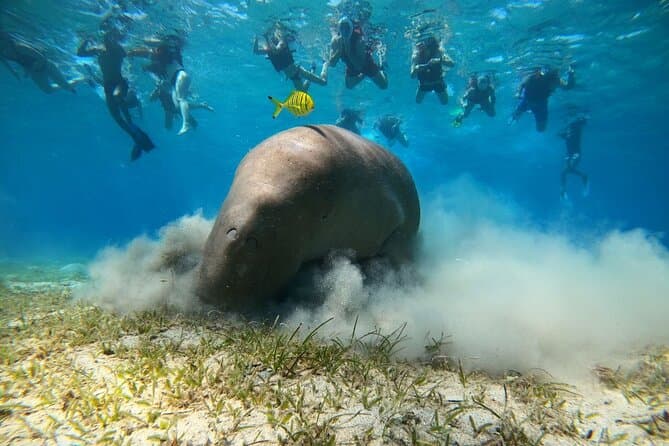
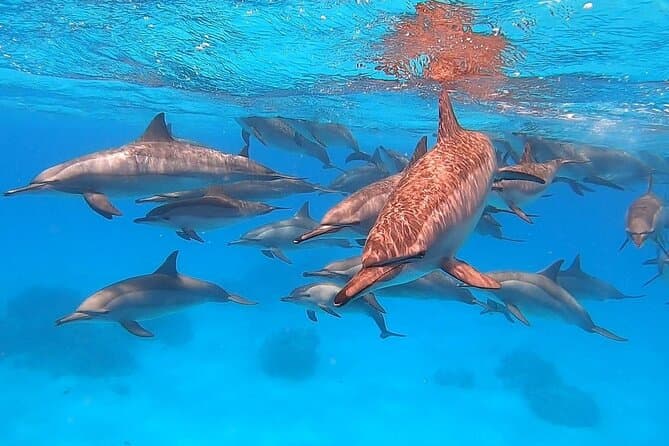
Even a genuinely good house reef is a fixed patch of coral. It will not put you in Samadai's dolphin lagoon, on Sataya's quieter reef further south, or on the Abu Dabbab seagrass where dugongs actually graze — those are separate, protected sites reachable only by boat. We cover the trade-off properly in house reef or boat trip if you're deciding how to split a week.
Judging yours in five minutes
Walk to the water on arrival, before you unpack. Look for a visible colour change in the water 20–50 metres out — darker water usually means depth and structure, not just sand. Ask a member of staff, not just the rep, where locals or divers actually go in. If the honest answer is 'we usually take a boat', that's your house reef told you what it's worth.
Frequently asked questions
Can you recommend a specific hotel for the best house reef?
We don't rank hotels by name — reef conditions in front of any one property can change after a storm, and we'd rather give you a way to judge it yourself than repeat outdated claims.
Are house reefs near Port Ghalib generally better?
As a pattern, yes — several properties there sit on natural reef rather than an artificial sand beach, which tends to mean a closer, healthier drop-off. It's not universal, so still check on arrival.
Is a house reef ever as good as Dolphin House or Abu Dabbab?
No. Those are separate protected sites reachable only by boat, with wildlife (spinner dolphins, dugongs) that simply isn't present on a hotel's own reef. A good house reef is a genuinely nice snorkel — it's a different product, not a substitute.
What if my hotel's house reef turns out to be poor?
That's exactly when a boat day earns its price. See what's included on a Marsa Alam snorkel trip for what you're actually paying for on the boat versus what's already covered by your room.
Dolphin House, Samadai Reef
From €59 / adult · 9 hours (approx.)