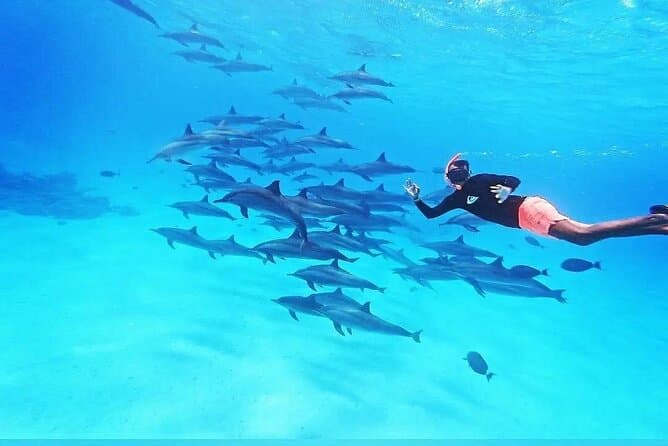
Beginner guide
Never Snorkeled Before? Your First Time in the Red Sea
· 8 min read · Lina Paoli, Marketing Manager
The fears that matter, and the ones that don't
Most first-timer anxiety clusters around a few specific things: 'I'm not a strong swimmer,' 'what if the mask leaks or fogs up,' 'what if I can't breathe properly through the tube,' and 'what if I panic and there's no way out.' Here they are one at a time.
You do not need to be a strong swimmer. You need to be comfortable in water — meaning you can float, you're not afraid of your face being in water, and you're not distressed by being out of your depth with a flotation aid on. A life vest does the buoyancy work; snorkeling is far closer to floating on the surface than swimming in the athletic sense. If you can comfortably float on your back in a pool, you have what you need physically.
Mask leaking and fogging is real, common, and completely manageable — not a rare bad-luck event. Almost every mask fogs a little without preparation, and most masks leak briefly at some point in a session. Neither is dangerous or a sign something's wrong; they're just part of using the gear.
Breathing through a tube feels strange for the first few minutes and then becomes automatic. The tube is wider and easier to breathe through than most first-timers expect. The adjustment period is real, but it's measured in minutes, not the whole trip.
Mask fit: the single factor that determines your experience
If we had to pick the single factor that separates a good first snorkeling experience from a bad one, it's mask fit — more than swimming ability, more than the reef itself. A mask that seals properly against your face doesn't leak, and a mask that doesn't leak removes most of the anxiety people associate with snorkeling.
To check fit before you're in the water: place the mask on your face without the strap, breathe in gently through your nose, and see if it stays in place on its own suction for a few seconds. If it holds without you pressing it, it seals. If it slides or falls immediately, it's the wrong size or shape for your face, and you should ask your guide for a different one before getting in the water — don't try to make an ill-fitting mask work by tightening the strap harder, which usually just makes it uncomfortable without fixing the leak.
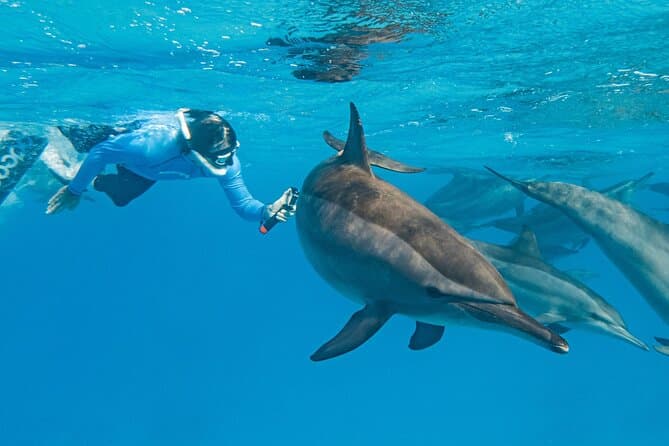
Defogging and clearing your mask
A little fog in a new mask is completely normal, not a defect. Guides typically use a defogging solution or diluted baby shampoo applied to the inside of the lens before the trip, rubbed in and rinsed briefly with a small amount of water — never wipe it fully dry, since a very thin residue is what prevents fogging.
If your mask starts fogging mid-swim, a small amount of water swished inside the mask often clears it enough to continue; this is routine, not an emergency, and your guide will help if you're unsure.
Breathing calmly through a tube
The tube itself isn't the hard part — staying calm while using it is. If you find your breathing getting quick or shallow in the first few minutes, that's a normal anxiety response, not a sign of a problem with the equipment. Slow the breath down deliberately: a longer exhale than inhale tends to settle this quickly.
Most first-timers report that the strangeness fully disappears within five to ten minutes once the brain stops treating the sensation as unusual.
What life vests actually do
A life vest keeps you at the surface without effort, which means you never need to tread water or actively swim to stay afloat. This is the single biggest misconception people have about snorkeling difficulty — you're not swimming laps, you're floating with a mask on, occasionally kicking gently to move. The vest does the work; you're along for the view.
How guides position themselves, and what to tell them
On a guided first-timer trip, your guide isn't simply pointing at fish from a distance — they position themselves near less confident swimmers specifically, keep a visual check on the group, and are trained to notice early signs of discomfort before they become a real problem.
If you tell your guide upfront that this is your first time, they will adjust how closely they stay near you, and there's no downside to saying so plainly. It's the single most useful thing a nervous first-timer can do before getting in the water. You can also signal your guide at any point and be brought back to the boat or shore — this isn't a special accommodation, it's completely normal, and guides expect it.
Why Abu Dabbab is the right first trip
Our Abu Dabbab beach-entry trip is specifically the one we point first-timers toward, for a simple reason: you wade in gradually from a beach rather than entering from a moving boat, the water is shallow and calm near shore, and you can stand up and reset at any point without needing to be brought back to a vessel.
That combination — gradual entry, shallow water, and the ability to simply stand up — removes most of what makes a first snorkeling experience feel high-stakes. Our boat trips to Samadai and Sataya are excellent, but we'd rather a nervous first-timer build confidence at Abu Dabbab first. Before you go, see our complete packing list for a Marsa Alam snorkeling day.
What to expect, honestly
The first ten minutes will likely feel strange — the mask, the tube, the sensation of floating face-down. That's universal, not a sign you're doing it wrong. Most first-timers describe a clear shift somewhere in that first ten minutes where it stops feeling effortful and starts feeling like the reason they came.
It's also worth knowing what a good first session actually looks like from the outside: most first-timers spend the early minutes close to their guide, moving slowly, occasionally lifting their head to check their bearings — and that's exactly what it's supposed to look like. The guests who enjoy it most aren't the ones who felt no nerves; they're the ones who got in anyway.
Frequently asked questions
Do I need to know how to swim at all?
You should be comfortable in water and not distressed by floating or being out of your depth with a life vest on. You don't need strong swimming technique.
What if my mask keeps leaking no matter what I try?
Ask your guide for a different size or shape before entering the water — most persistent leaks are a fit issue, not something you're doing wrong.
Is it normal to feel anxious right before getting in?
Yes, and it's common enough that guides expect it. Tell your guide directly; they'll pace your entry accordingly.
Can I wear contact lenses while snorkeling?
Contact lenses generally work fine under a standard mask. Prescription snorkel masks are available for stronger prescriptions — ask in advance if you need this.
What if I swallow water through the tube?
It happens occasionally to almost everyone and isn't dangerous — lift your head above water, clear the tube, and continue once you're comfortable.
Will I be forced to go further from the boat or shore than I'm comfortable with?
No. Guides pace the group and never require anyone to go further than they're comfortable, and you can head back at any time.
Is it embarrassing to be the slowest or most nervous person in the group?
No — every group has a range of experience levels, and guides are used to it. Nobody on our trips is judged for going carefully.
How long until it stops feeling strange?
Most first-timers report the awkwardness fading within five to ten minutes. By the second rotation of the day, it typically feels routine.
Dugongs & Turtles, Abu Dabbab
From €60 / adult · 8 hours 30 minutes