Photography guide
Underwater Photography for Snorkelers: Getting Shots Worth Keeping
· 9 min read · Lina Paoli, Marketing Manager
Why underwater photography is harder than it looks
A phone camera is built and calibrated for shooting in air, where light behaves predictably and autofocus systems are tuned for typical above-water contrast and color. Underwater, light scatters differently, color shifts, and a waterproof case or housing adds a layer of refraction the lens wasn't designed around. None of this makes phone photography impossible — plenty of good reef shots are taken on phones — but expectations should be calibrated to the medium, not to a brochure shot taken with dedicated underwater equipment and professional editing.
Cheap housings fail at the seal — a stray hair, a grain of sand, or a worn gasket breaks the watertight seal enough to let water in gradually, often without an obvious signal until it's too late. Before every use, check the seal area is completely clean and dry, and do a shallow test — a few seconds at the surface — rather than assuming a housing that worked last time will work again without checking.
Protect your equipment first
A floating wrist strap is the cheapest, highest-value piece of gear on this list. A dropped or unclipped camera without flotation sinks, sometimes permanently, in water too deep to recover it. Attach it before you enter the water, not after you've already noticed you should have.
Three techniques that improve every underwater photo
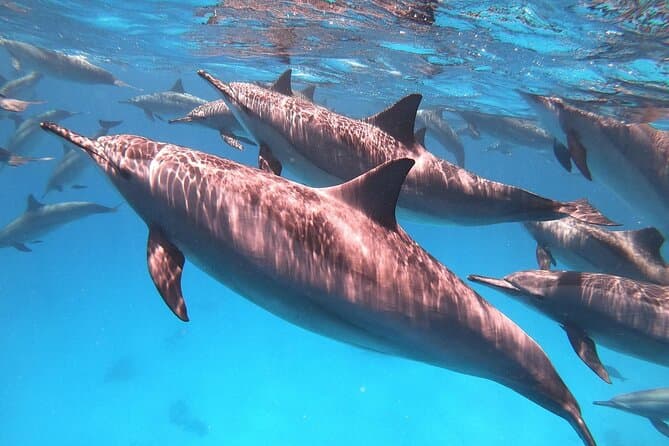
Shoot toward the surface for light. Light comes from above, so composing a shot with the subject between your camera and the surface captures far more natural light and produces a noticeably brighter, more colorful result. This single compositional habit does more for image quality than most equipment upgrades.
Get close instead of zooming. Digital zoom on most action cameras and phones degrades image quality substantially, and water between your lens and the subject adds haze and color loss that gets worse with distance. Physically approach the subject slowly rather than zoom from further away — better light, better color, better sharpness, all from closing the distance with your body rather than your lens.
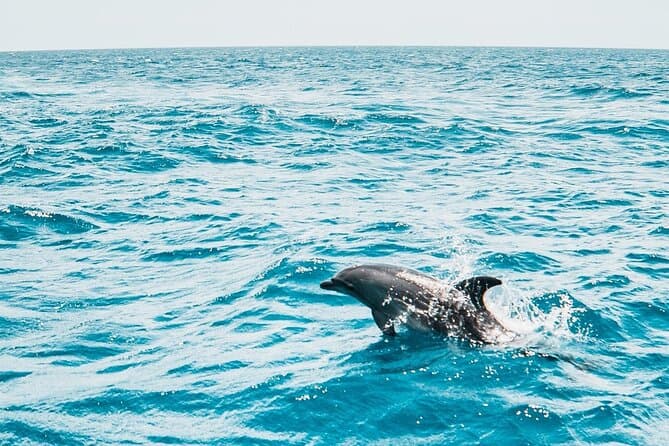
Use burst mode for moving animals. A single well-timed shot of a moving fish or dolphin is genuinely difficult to time by eye — reaction time and shutter delay both work against you. Burst or continuous shooting mode takes this out of your hands: fire a burst as the subject moves through frame and pick the sharpest result afterward.
Why red disappears with depth
Water absorbs red wavelengths of light faster than any other color, which is why reef photos taken even a few meters down often look uniformly blue-green regardless of how colorful the reef actually is to the naked eye at close range. This isn't a camera flaw — it's a physical property of how light travels through water.
Shooting closer to the surface, using any red-restoring filter your camera supports, or correcting color balance afterward in basic editing can recover some of what the water absorbs. Flash doesn't meaningfully solve this at snorkeling depths and distances, which is part of why we recommend against it near animals.
The ethics of the shot
Getting a great photo and behaving responsibly around wild animals are not always in tension, but when they are, the animal's welfare comes first — not as an abstract principle, but as a specific set of practical rules.
Watch through your eyes, not just your screen. Guests who spend an entire encounter framing a shot through a screen consistently report enjoying it less afterward — and dolphins in particular pass through in a matter of minutes. Get a few shots, then watch. You came for the encounter, not only the photo of it. For the specific behavior rules around dugongs — the most sensitive subject on any of our trips — read the dugong spotting etiquette guide.
- No flash near any wild animal at close range
- Never change position to chase a shot — if an animal is moving away, that's information
- Never dive down on a dugong or turtle to get the angle
- A GoPro on an extended stick has the same disturbance effect as physically approaching too closely
Putting it together
The technical habits — shooting toward light, getting close rather than zooming, using burst mode, protecting your gear — will improve almost any underwater photo you take. The ethical habits matter more, because they're the difference between a photo you're proud of and an encounter you disrupted to get it.
The best underwater photographers we see on our trips tend to be the ones who treat the camera as secondary to the experience, and their photos are usually the better for it anyway — a relaxed, undisturbed animal photographs better than a startled one moving away. A calm, gradual approach reads to most marine life as non-threatening, so the technique that produces sharper, better-lit shots is largely the same one that keeps the animal undisturbed.
Frequently asked questions
Do I need an expensive camera to get decent reef photos?
No — a well-sealed phone housing or an entry-level action camera, used with the techniques above, produces solid results. Technique matters more than equipment cost for snorkeling-depth photography.
How do I know if my housing has a good seal?
Check the gasket for any debris or wear before every use, and do a brief surface test before committing to a full swim. A seal that worked previously isn't guaranteed to work again without checking.
Why do all my underwater photos look blue?
Water absorbs red light with depth, which shifts color toward blue-green even in photos of colorful reefs. Shooting closer to the surface and correcting color afterward both help.
Is it okay to use flash on fish, even if not on dolphins or dugongs?
We'd recommend avoiding flash on any wild animal at close range — it offers little photographic benefit underwater and is an unnecessary disturbance regardless of species.
What's the biggest technique mistake beginners make?
Relying on zoom instead of physically approaching the subject, and shooting downward or straight ahead instead of angling toward the surface for light. Both are free fixes that improve results immediately.
Can I use a GoPro on a selfie stick to get closer to marine life?
We'd discourage extending a stick toward an animal specifically to close distance — it has the same effect as physically approaching too closely, and can be startling in a way that's hard to predict from behind a screen.
Should I skip photography altogether to enjoy the moment more?
Not necessarily — a few shots are fine. The point is balance: don't spend an entire dolphin encounter, which may last only minutes, watching it exclusively through a screen.
Dolphin House, Samadai Reef
From €59 / adult · 9 hours (approx.)