Destination guide
Wadi El Gemal National Park: Dolphin House, Samadai Reef and What You Can Actually Do
· 7 min read · Lina Paoli, Marketing Manager
What Wadi El Gemal actually is
Wadi El Gemal – Hamata National Park is a protected stretch of coast and islands south of Marsa Alam, run by Egypt's Nature Conservation Sector. It covers reefs, mangroves, seagrass meadows and a few uninhabited islands — not a single site you drive to and park outside.
Samadai Reef (the horseshoe lagoon most people call Dolphin House) and the Abu Dabbab seagrass bay both sit inside or right on the edge of this protected area. That is not a marketing detail. It is why entry is controlled rather than open.
Why you can't just show up
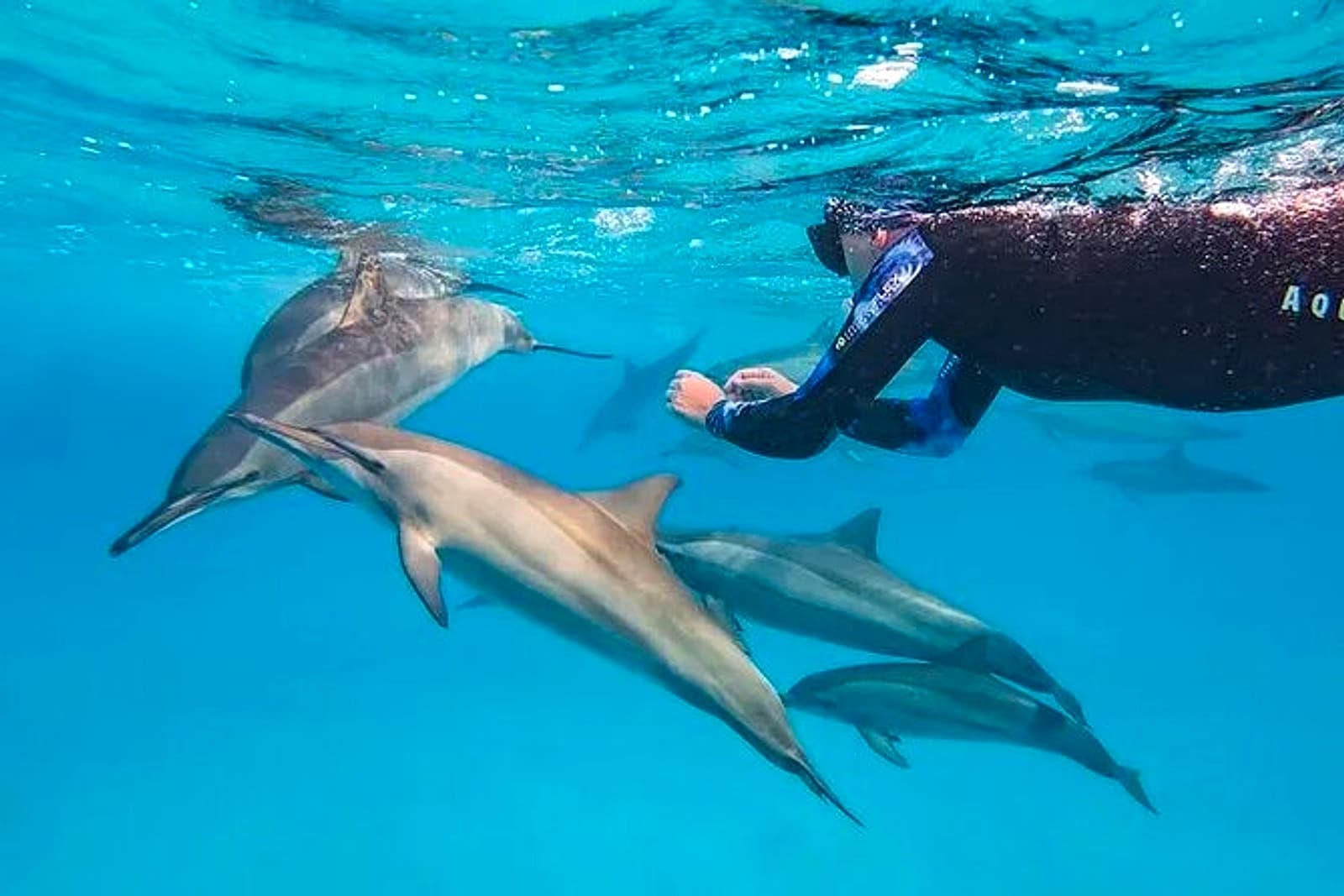
Samadai has a ranger station and a rope-marked swim zone. Boats register, pay a conservation fee per guest, and keep to the marked lanes so the resident spinner dolphins aren't boxed in by traffic. This is the actual reason day trips run on a boat with a licensed operator rather than as a taxi-and-walk-in — the lagoon itself is only reachable by water, and access is gated at the ranger post.
Abu Dabbab is shore-adjacent and technically walkable from a couple of hotels, but the seagrass meadow where dugongs graze is a fair swim out, and the site still falls under park rules on distance from marine life.
- Conservation/park fee is charged per guest, usually built into your trip price or added on the boat
- Marked lanes and ranger oversight at Samadai — not a free-swim beach
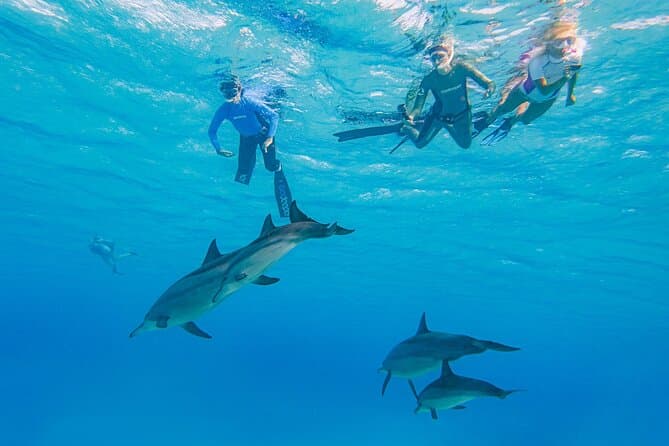
- Rules on distance from dolphins and dugongs apply to everyone, guided or not
- No touching, no feeding, no chasing — enforced, not a suggestion
What this means for planning your day
In practice: you book a boat trip that already includes park access, a guide who knows the current rules, and a return slot that respects how long rangers allow boats to stay. That is what our Samadai trip and the Abu Dabbab dugong day already handle — the fee and the briefing are in the price, not an extra you negotiate on the beach.
If you are staying south near Hamata itself, some hotels sit inside or beside the park and can arrange entry directly — worth asking at check-in rather than assuming a day trip is your only route in.
Sataya, further south
Sataya Reef is further south again, near Hamata, and is a separate protected site with its own permit process — this is part of why Sataya trips run longer and cost more than Samadai: more distance, more paperwork, a smaller daily quota of boats.
Frequently asked questions
Do I need my own permit to visit Wadi El Gemal?
No — if you book a boat trip to Samadai, Abu Dabbab or Sataya, the operator handles the park entry and conservation fee as part of the booking. You only need a separate permit if you're arranging independent access through a hotel inside the park.
Is Dolphin House the same place as Wadi El Gemal?
Not quite. Dolphin House is the common name for Samadai Reef, one site inside the larger Wadi El Gemal – Hamata National Park, which also covers Abu Dabbab, several islands, and stretches of coast further south.
Can I drive to Samadai and swim in on my own?
No. Samadai's lagoon is only reachable by boat, and entry is controlled at a ranger post to protect the resident dolphins. There is no independent shore access.
Is there an extra fee on top of my trip price?
Usually not — the conservation/park fee is built into the price of a standard day trip. If you've booked something unusually cheap, ask what's included before you go.
Why are the rules about distance from dolphins so strict?
Samadai's spinner dolphins use the lagoon to rest during the day. Crowding or chasing them changes that behaviour over time, which is why lanes, guides and ranger oversight exist — not to slow you down, but to keep the site worth visiting next year too.
Dolphin House, Samadai Reef
From €59 / adult · 9 hours (approx.)