Havliv
Å svømme med dugonger ved Abu Dabbab: regler, etikette og reelle odds
· 10 min lesing · Lina Paoli, Marketing Manager
Reglene, samlet på ett sted
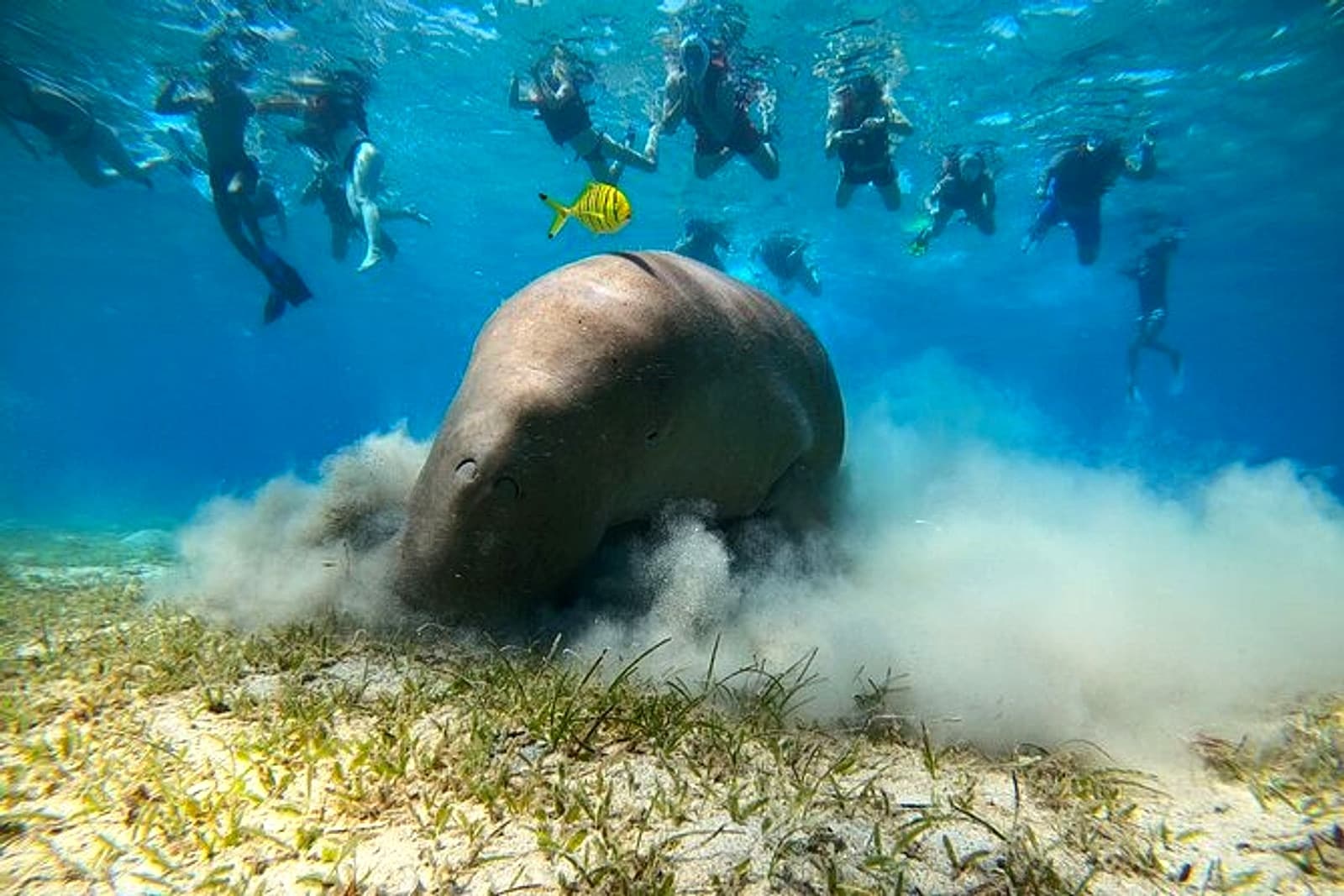
Hvis du tar med deg én ting fra denne guiden, ta disse. Dugonger er vernet, lett å stresse, og et dårlig møte kan drive et dyr bort fra beiteområdet sitt resten av dagen.
Ingenting av dette er vanskelig. Det handler stort sett om å holde seg stille og la dyret fortsette å spise.
- Rør aldri en dugong, og forsøk aldri å ri på eller holde fast i en
- Bli ved overflaten — ikke dykk ned oppå den
- Hold minst 3–5 meters avstand, og omring den aldri
- Blokker aldri veien dens til åpent vann eller til overflaten for å puste
- Ingen blitsfotografering
- Hvis den slutter å beite og beveger seg bort, er du for nær — trekk deg unna
Hva en dugong faktisk er
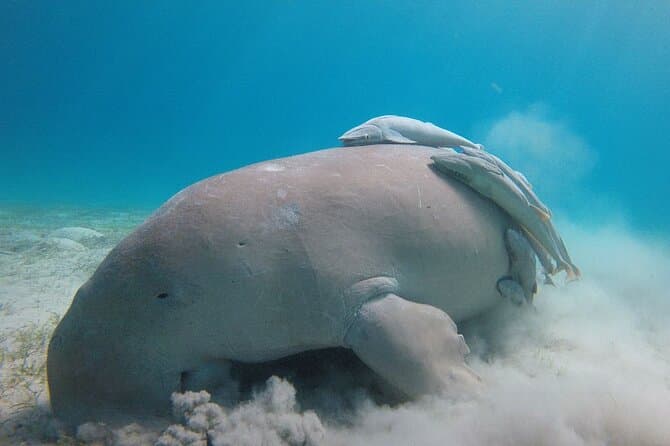
Dugonger er sjøpattedyr, ikke fisk, og deres nærmeste nålevende slektninger er elefanter heller enn seler eller delfiner. Lokalt kalles de sjøkyr, som er en rimelig beskrivelse av hvordan de oppfører seg: de beiter sjøgress, sakte, mesteparten av dagen.
En voksen når rundt tre meter og 400 kilo. De er fredelige, langsomme og fullstendig ufarlige — de har ingen som helst interesse av deg, som er nettopp derfor det er så lett og så unødvendig å forstyrre en.
De går opp for å puste hvert par minutter og vender tilbake til sjøgresset. Den rytmen er det som skal beskyttes. Et dyr som stadig må avbryte spisingen sin for å unngå svømmere, er et dyr som brenner energi det trenger.
Hvorfor de trenger dette vernet
Dugonger er oppført som sårbare for utryddelse av IUCN, og bestanden i Rødehavet er liten og tynt spredt. Dette er ikke et vanlig dyr som har en rolig dag. Enkeltdugonger betyr noe for bestanden på en måte som enkeltrevfisk ikke gjør.
De kommer seg også sakte. Hunner får én enkelt kalv etter en lang drektighet, og bare hvert par år. En bestand som mister dyr, tar seg ikke raskt opp igjen.
Maten deres er det andre presset. Dugonger er helt avhengige av sjøgressenger, og sjøgress skades av båtankere, kystutbygging og sedimenter. Å verne enga ved Abu Dabbab er like viktig som å verne dyrene i den — som er grunnen til at båter fortøyer varsomt, og hvorfor du aldri bør stå på eller sparke gjennom sjøgresset.
Hvor du kan få se en nær Marsa Alam
Abu Dabbab-bukta, omtrent 30 minutter nord for Marsa Alam langs veien, er det best kjente dugongstedet på denne kyststrekningen og grunnen til at turen finnes. Den grunne sjøgressenga er førsteklasses beiteområde.
Bukta er vernet, og adgangen er regulert. Du går uti fra stranda ut i grunt vann som skråner gradvis, noe som gjør det til en enkel snorkling — ingen båtoverfart, ingen dyp inngang, og på en normal dag svært lite strøm.
Samme enga forsørger fastboende grønne havskilpadder, noe som er reelt nyttig å vite når du setter forventningene. Skilpadder beiter samme sjøgress og sees på de fleste turer. Dugongen er den sjeldnere gevinsten samme dag.
Dine realistiske odds — den ærlige versjonen
Vi vil heller at du bestiller med presise forventninger enn at du føler deg villedet etterpå, så her er det rett ut.
Skilpadder: svært sannsynlig. Abu Dabbab har fastboende grønne havskilpadder som beiter i sjøgresset daglig. På en normal dag ser de fleste gjester minst én, ofte nær og uforstyrret mens den beiter. Dette er den pålitelige delen av turen.
Dugonger: reelt uvanlige. De er enslige, sky og få i antall. En observasjon er ekte flaks, ikke et planlagt punkt på programmet. Enhver som annonserer et garantert dugongmøte, villeder deg enten eller planlegger å trakassere et dyr for å frembringe ett.
Rådet vårt er enkelt: bestill Abu Dabbab for skilpaddene og det rolige, enkle vannet. Se på en dugong som en bonus. Da blir dagen god uansett — som ifølge tallene er slik det som regel går.
Hvordan du oppfører deg hvis du finner en
I det øyeblikket en dugong dukker opp, er fristelsen å svømme mot den. Gjør det motsatte.
Stopp og fly. Bli der du er, bli ved overflaten, og la dyret fortsette langs sin egen linje. En dugong som ikke føler seg forfulgt, fortsetter ofte å beite noen meter fra deg i flere minutter — langt bedre enn et kort glimt av en som forlater stedet.
Kom aldri mellom den og åpent vann, og aldri mellom den og overflaten. Den må puste. Å blokkere den veien er det mest stressende en gruppe snorklere kan gjøre, og det er det som vanligvis avslutter et møte.
Ikke dykk ned mot den. Fridykking over en beitende dugong driver den bort fra enga. Se på den fra overflaten.
Hold gruppen spredt og bak den. En halvsirkel av mennesker som lukker seg, leses som et rovdyr av ethvert dyr. Guider plasserer gruppen bevisst — følg dem.
Ikke bruk blits. Den skremmer dyret og gir dessuten dårlige bilder i grunt, lyst vann.
Hvordan forstyrrelse faktisk ser ut
Nyttig å gjenkjenne, fordi de fleste som forstyrrer viltlevende dyr, ikke er klar over at de gjør det.
En avslappet dugong beiter med hodet ned, beveger seg sakte og går opp i en jevn rytme. En stresset slutter å beite, løfter hodet, skifter retning brått eller går opp hyppigere og kortere.
Ser du noe av det, er gruppen for nær. Trekk deg unna og gi den rom. Den kan godt roe seg og gjenoppta — og gjør den det, får du et langt bedre møte enn ved å følge etter.
Det samme gjelder skilpadder. En skilpadde som gjentatte ganger avbryter turen sin til overflaten fordi det er folk over den, blir skadet, stille, selv om ingenting dramatisk ser ut til å skje.
Hvorfor reglene også beskytter opplevelsen din
Det er lett å lese alt dette som begrensning. Det er nærmere det motsatte.
Steder som forvaltes godt, beholder dyrene sine. Abu Dabbab har fortsatt dugonger og fastboende skilpadder fordi bukta er vernet og enga intakt. Steder som lar besøkende jage og trenge havlivet, mister det — dyrene flytter seg, og operatørene sitter igjen med å selge en tur til en tom bukt.
Den praktiske versjonen: rolige grupper ser mer. Enhver guide vil si det samme. Gjestene som flyter stille og venter, får lange, nære møter. De som svømmer hardt mot alt, får tretti sekunder av et dyr som trekker seg unna.
Hvis guiden din kaller folk tilbake eller avkorter en tilnærming, er det ikke forsiktighet for sin egen skyld. Det er grunnen til at det fortsatt vil være noe å se neste sesong.
Ofte stilte spørsmål
Hvor kan man svømme med dugonger i Marsa Alam?
Abu Dabbab-bukta, omtrent 30 minutter nord for Marsa Alam, er det best kjente dugongstedet på denne kysten. Den grunne sjøgressenga er beiteområde for dugonger og for fastboende grønne havskilpadder, og du går uti fra stranda heller enn med båt.
Hvor sannsynlig er det at jeg får se en dugong ved Abu Dabbab?
Betydelig mindre sannsynlig enn å se skilpadder. Dugonger er enslige, sky og få i antall, så en observasjon er ekte flaks heller enn en normal del av dagen. Grønne havskilpadder sees derimot på de fleste turer. Bestill for skilpaddene, og se på en dugong som en bonus.
Kan man røre en dugong?
Nei, aldri. Å røre, ri på eller holde fast i en dugong er forbudt og skadelig. De er en sårbar art, og fysisk kontakt forårsaker alvorlig stress. Hold 3–5 meters avstand og se på fra overflaten.
Er dugonger farlige for svømmere?
Nei. Dugonger er fredelige planteetere som beiter sjøgress og ikke har noen interesse av mennesker. Risikoen går helt motsatt vei — bekymringen er skaden svømmere kan påføre dem, ikke omvendt.
Hvorfor er dugonger truet?
De klassifiseres som sårbare av IUCN. De formerer seg svært sakte — én enkelt kalv hvert par år — og er helt avhengige av sjøgressenger som skades av ankring, kystutbygging og sedimenter. Små, sakte formerende bestander kommer seg dårlig etter tap.
Hva er forskjellen på en dugong og en manat?
De er beslektet, men forskjellige. Dugonger lever i indo-stillehavsfarvann inkludert Rødehavet, har en kløftet halefinne som en delfin og lever utelukkende av sjøgress. Manater lever i Atlanterhavet og Karibia, har en avrundet padleformet hale og tåler ferskvann.
Er Abu Dabbab egnet for nybegynnere og barn?
Ja, og det er den mildere av snorkledagene våre. Du går uti fra stranda ut i grunt vann uten båtoverfart og, på en normal dag, uten strøm. Redningsvester stilles til rådighet, og du kan komme opp og hvile når du vil.
Kan jeg ta bilder av dugonger?
Ja, men uten blits og uten å skifte posisjon for å jage et bilde. Bli ved overflaten, hold avstanden, og la dyret bevege seg naturlig. I Abu Dabbabs lyse, grunne vann gir naturlig lys bedre resultater enn blits uansett.
Dugonger og skilpadder, Abu Dabbab
Fra €60 / voksen · 8 timer og 30 minutter