Practical guide
What a Marsa Alam Snorkeling Boat Day Actually Looks Like
· 10 min read · Lina Paoli, Marketing Manager
The short version
A Marsa Alam snorkel day is not a two-hour hotel activity. You are collected from your hotel in the morning, you spend most of the daylight hours on a boat or in the water, and you are dropped back in the afternoon. Lunch, drinks, mask, fins and a life vest are already in the price on our trips. What you control is how you prepare for the sun, the crossing, and the wait between sessions.
The timeline below is the Samadai day, because that is the one most people book first. Abu Dabbab is a similar shape with less time at sea. Sataya is the same idea stretched by a long drive south. If you are still choosing, start with how to pick if you have one day.
- Swimsuit on before pickup — changing space on deck is limited
- Seasickness tablets at the hotel, not after you board
- Two snorkel sessions, not a continuous swim
- The afternoon can feel cold on the way home, even in summer
Before you leave the hotel
Pickup for Samadai is listed at 07:00. In practice the window depends on where you are staying along the strip. Have breakfast if your hotel is serving that early; if it is not, eat something anyway. An empty stomach on a boat is a poor combination with sun and chop.
Wear your swimsuit under a T-shirt and shorts. Bring a towel, reef-safe sunscreen already on, a hat, and a dry change of clothes in a bag. The full list is in what to pack. Leave jewellery in the room. There is nowhere secure on a small boat.
If you are staying south of Marsa Alam city, there is an extra transfer charged on the boat — EUR 10 on the Samadai day, EUR 8 on Abu Dabbab. Tell us the hotel name and room number when you book so the driver is not guessing.
Marina, briefing, kit
At the marina you wait with the rest of the group while the boat is readied. This is the dull part of the day and it is normal. Use it to tell the guide if you have never snorkeled, if you get seasick, or if you want to stay close to the boat. Guides would rather hear that on the quay than in the water.
Gear is sized on board: mask, fins, life vest. A vest that actually fits is more useful than fins you have never worn. If a mask leaks on your face in air, ask for another size before you hit the water — that is the same advice as in your first time in the Red Sea.
The crossing
Samadai is roughly 15 km offshore, about 45 minutes each way in ordinary conditions. This is when people who skipped tablets regret it. The deck is sunny, the wind is real, and looking at the horizon helps more than staring at a phone.
Abu Dabbab’s boat legs are shorter — the trip notes two guided sessions and about 25 minutes by boat as part of the day. Sataya’s sea time is not the long part; the drive to Hamata is. If wind is the worry, what happens when the weather turns is the operational version.
In the water — twice, not all day
You do not snorkel for six hours. You get two sessions with a rest and lunch between them. That is deliberate. People underestimate how tiring it is to be face-down in the sun, even with a vest holding you up.
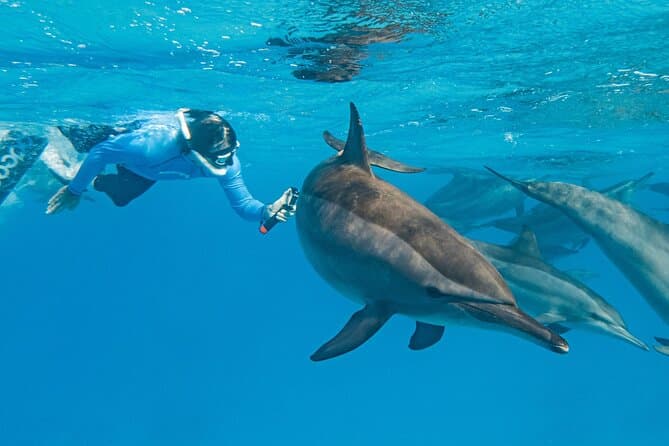
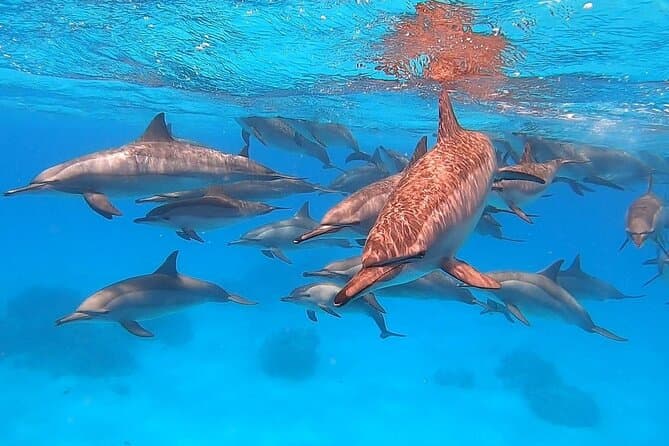
On Samadai the first session is usually the lagoon, where the dolphins rest if they are in. You stay in the permitted zone. You do not chase the pod. A good encounter is animals passing below and alongside you for minutes, not a swim-through the middle of the school. Some mornings they are there. Some mornings you have a superb reef and no dolphins. Both outcomes are real.
The second stop is the other half of the day — more reef, more fish, a chance to reset if the first session felt rushed. Stay with the guide. Get out when you are tired. Nobody is scoring you on time in the water.
Lunch, the wait, the way home
Lunch is a buffet on board, with water, soft drinks and hot drinks through the day. If you have a dietary requirement, say so when you book rather than hoping the boat has a separate kitchen.
The ride back is when people shiver. You have been wet, the air-conditioned minibus finishes the job, and a light layer in your bag is worth more than it looks. You are at the hotel in the afternoon, not in time for a second excursion the same day.
Tipping the crew is customary and cash-only. There is no card machine on the boat. What is included, and what you still pay extra lists the rest.
Frequently asked questions
How long is a Marsa Alam snorkeling day trip?
Samadai is about nine hours door to door. Abu Dabbab is about eight and a half. Sataya is about ten, mostly because of the drive to Hamata.
What time is hotel pickup?
Samadai pickup is listed from 07:00. Exact time depends on your hotel. Sataya is confirmed the day before by WhatsApp and email because of sailing permits.
Is lunch included?
Yes — buffet lunch plus water, soft drinks and hot drinks on our boat days. Gear and a life vest are included too.
How many times do we snorkel?
Two guided sessions, with a break and lunch between them. You are not in the water all day.
Do I need to be a strong swimmer?
You need to be comfortable floating with a life vest in open water off a boat. You do not need athletic swimming. If that still worries you, Abu Dabbab is the gentler day.
What should I wear?
Swimsuit under clothes at pickup, plus a T-shirt or rash vest, hat, and a dry layer for the way home. Reef-safe sunscreen on before you leave the hotel.
Dolphin House, Samadai Reef
From €59 / adult · 9 hours (approx.)