Trip guide
Sataya or Samadai? Both Are Called 'Dolphin House' — Here's the Difference
· 9 min read · Lina Paoli, Marketing Manager
The short answer
Samadai Reef is the better choice if you want a shorter day, a smoother introduction to open-water snorkeling, and don't mind sharing the reef with more boats. It's roughly 45 minutes offshore, the day runs about 8 hours, and it costs EUR 55 per adult.
Sataya Reef is the better choice if you want a quieter reef, a longer and more immersive day, and you don't mind a 2-hour drive each way to reach Hamata before you even get on a boat. The full day runs close to 10 hours, and it costs EUR 75 per adult — less expensive, but a real time commitment.
Neither trip guarantees dolphin sightings. Both reefs have resident spinner dolphin pods that are seen frequently, but 'resident' doesn't mean 'on schedule,' and any operator who tells you otherwise is selling you a story, not a reef.
What each reef actually is
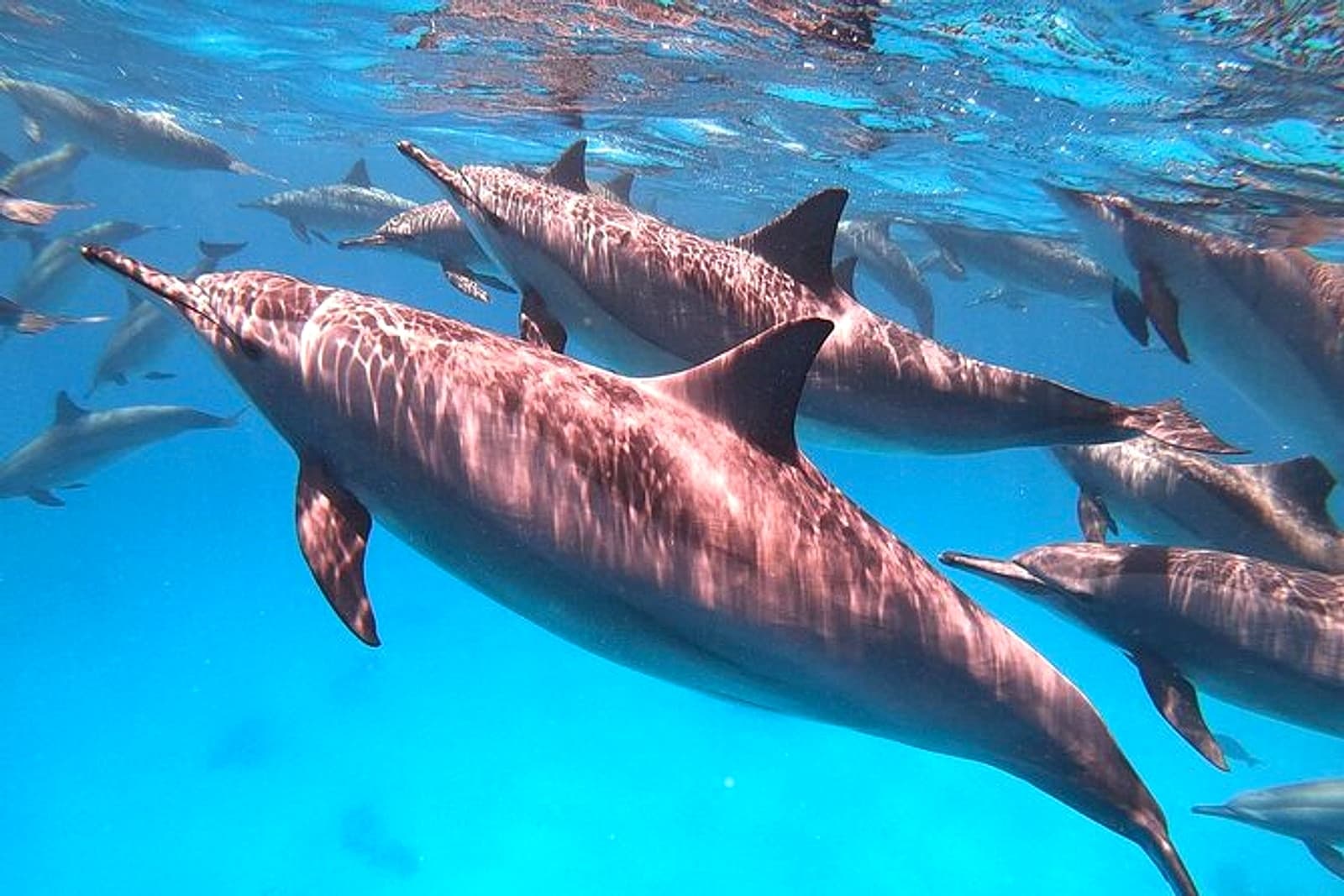
Samadai Reef sits about 15 km offshore from Marsa Alam and has been a protected marine area since 2004. It's shaped like a horseshoe, with a lagoon in the middle where the resident spinner dolphin pod rests during the day. Because it's protected, access is controlled: boats moor at fixed points, swimmer numbers in the water are capped, and there's a no-entry core zone where the dolphins can rest undisturbed. This protection is exactly why the pod has stayed reliable for two decades — but it also means Samadai sees more boat traffic than Sataya, simply because it's closer to Marsa Alam.
Sataya Reef is further south, near the town of Hamata, and getting there is the main difference in the whole comparison. It's not that Sataya itself is hard to reach by boat — it's that you have to drive roughly 2 hours each way from Marsa Alam to Hamata before the boat part even starts. That drive is a real cost, not a footnote. Once you're there, Sataya is quieter: fewer operators run it regularly, so the reef sees noticeably less boat traffic, and the resident pod there tends to be less habituated to constant human presence.

A typical Samadai day
Early pickup from your hotel and transfer to the marina. Roughly 45-minute boat crossing to the reef. Two to three snorkeling rotations in and around the protected lagoon, spaced with rest and lunch on board. Return crossing and drop-off — door to door around 8 hours.
If you are prone to seasickness, take something before you leave the hotel rather than after you board. The crossing is manageable for most people but not short enough to ignore if you know you're susceptible.
A typical Sataya day
Very early pickup — you're losing daylight hours to the drive, so departure is earlier than a Samadai day. Two-hour drive to Hamata marina. Boat transfer out to the reef (shorter than Samadai's crossing once you're at Hamata). Longer time on the water, since you've already committed to the full day. Two-hour drive back to Marsa Alam. Door to door, close to 10 hours.
If you're prone to early starts feeling rough, or you dislike long vehicle transfers more than boat time, that difference matters more than anything else in this comparison.
What you'll see, beyond the dolphins
Both reefs are worth visiting on their coral and fish life alone, dolphins aside. Samadai's horseshoe reef has a well-developed coral wall on its outer edge, with the kind of reef fish density — parrotfish, butterflyfish, the occasional turtle — that makes it a solid snorkeling site even on a day the pod doesn't show. Because it's been protected since 2004, the coral has had two decades free of anchor damage, and it shows.
Sataya's reef structure is less manicured but arguably wilder — it sees less boat traffic and less snorkeler contact overall, so the fish are less habituated to human presence, which some guests find more rewarding and others find means less predictable close encounters. You're also more likely to have the water largely to yourselves for long stretches.
Crowding and boat traffic
This is where the two trips diverge most. Samadai's proximity to Marsa Alam means it's a default stop for a large share of day-boat operators, so on a busy day you'll be one of several boats moored at the reef, with swimmer numbers in the water controlled by the protected-area rules but still a shared experience.
Sataya's remoteness is inconvenient for logistics but genuinely good for the reef experience — fewer boats make the trip, so you're more likely to have long stretches of water without another group nearby. Neither is empty. Both are known reefs. But if crowding is your main concern, Sataya has the edge — and that's despite it being the cheaper trip.
Which to pick
Choose Samadai if: this is your first Red Sea boat trip, you want a shorter day, you're travelling with people who tire on long transfers, or you'd rather have a moderate cost with a shorter time commitment.
Choose Sataya if: you've done a boat snorkeling trip before and know you enjoy full days on the water, crowding at the reef bothers you more than a long drive, or the lower price matters and you have a full day to spend regardless.
A fair number of our repeat guests do both on longer stays — usually with a rest day in between. If your trip is long enough, they're different enough in character that seeing both isn't redundant. If your stay is short, pick the one that fits your appetite for a long day.
Frequently asked questions
Are Sataya and Samadai actually the same place with two names?
No. They're two separate reefs, roughly 100 km apart, each with its own resident spinner dolphin pod. The shared 'Dolphin House' nickname is a marketing convenience, not a geographic fact, and it's the single biggest source of booking confusion for this trip.
Which one has a higher chance of seeing dolphins?
We don't publish a sightings percentage, and you should be skeptical of any operator who does — pods move, and neither reef offers a guarantee. Anecdotally, our guides report frequent sightings at both, with Samadai's pod being somewhat more predictable simply because the protected zone limits disturbance to their resting pattern.
Is Sataya worth the extra drive time?
If a quieter reef and a longer day appeal to you, yes. If you'd rather minimize transfer time, no — and there's no wrong answer here, just a genuine trade-off.
Can beginners do the Sataya trip, or is it only for experienced snorkelers?
Sataya is manageable for a comfortable, confident snorkeler, but the long day (close to 10 hours, much of it transfer time) is a bigger consideration for beginners than the snorkeling itself. If it's your first time in open water, we'd point you toward Samadai or our beach-entry trip at Abu Dabbab first.
Do both trips include lunch?
Yes, both full-day trips include lunch on board.
What's the cancellation policy if the sea is too rough?
Both trips are weather-dependent, and safety decisions are made by the boat captain on the day. Samadai's shorter crossing is somewhat less affected by wind than Sataya's longer approach, but either trip can be adjusted or rescheduled if conditions require it.
Why is Sataya cheaper if it's a longer day?
The price reflects group logistics and demand, not quality — Sataya sees fewer bookings because of the drive, and pricing follows demand. It isn't a shorter or lesser experience; if anything, guests who choose it often rate the quieter reef highly.
Should I book Samadai or Sataya if I only have one day free?
For a single free day, most first-time visitors are better served by Samadai's shorter, more moderate day. Save Sataya for a return trip, or for a stay where a full 10-hour day doesn't compete with other plans.
Dolphin House, Sataya Reef
From €75 / adult · 10 hours