Praktický průvodce
Co si zabalit na jednodenní šnorchlovací výlet v Marsa Alam: kompletní seznam
· 9 min čtení · Lina Paoli, Marketing Manager
Krátký seznam
Pokud nepřečtete nic dalšího, vezměte si těchto šest věcí a budete mít dobrý den. Vše níže jsou podrobnosti o tom proč.
Většina toho, co si lidé na šnorchlovací výlet v Marsa Alam balí navíc, už na lodi je. Skutečně důležitá je ochrana proti slunci, něco suchého na převlečení a trocha hotovosti.
- Opalovací krém šetrný k útesům (SPF 50, minerální)
- Plavky — oblečené pod oblečením před svozem
- Ručník a suché náhradní oblečení
- Klobouk, sluneční brýle a lycrové triko s dlouhým rukávem
- Drobná hotovost na spropitné a případné příplatky
- Tablety proti mořské nemoci, pokud jste náchylní — užité před odjezdem
Co už je zajištěno (tohle nebalte)
Každý celodenní výlet, který pořádáme, zahrnuje vybavení, takže ho nechte doma, pokud nemáte silnou preferenci pro to vlastní.
Šnorchlovací maska, ploutve a záchranná vesta jsou poskytnuty a přizpůsobeny na palubě. Oběd, voda, čaj a nealkoholické nápoje jsou v ceně. Svoz z hotelu a zpět je zajištěn, takže nemusíte řešit dopravu ani nosit peníze na taxi.
Jedinou výjimkou ke zvážení je maska: pokud vlastníte masku, která vám dobře sedí na obličej, vezměte si ji. Padnutí masky je nejzásadnějším faktorem toho, zda si šnorchlování užijete, a známá maska, která netěsní, vždy poráží zapůjčenou. Ploutve zřídkakdy stojí za místo v zavazadle.
Ochrana proti slunci: v čem lidé chybují nejvíc
Právě zde se dobrý den nejčastěji pokazí a zaslouží si víc pozornosti než zbytek seznamu dohromady.
Jste osm hodin na otevřené vodě s odrazem od hladiny. Slunce u Rudého moře v červenci se nedá srovnat s dnem na pláži doma a spálená záda druhý den dovolené jsou skutečně mizerný výsledek.
Používejte opalovací krém šetrný k útesům (minerální), nikoli běžný. Oxybenzon a oktinoxát — obsažené ve většině standardních receptur — poškozují korály. V chráněné lokalitě, jako je Samadai, se stovkami návštěvníků týdně není kumulativní účinek zanedbatelný. Hledejte na etiketě oxid zinečnatý nebo oxid titaničitý. Mnoho egyptských resortů ho prodává, ale koupit ho ještě před cestou je jistější.
Lycrové triko s dlouhým rukávem poráží opakované mazání krémem. Je to nejúčinnější věc, kterou si můžete vzít. Budete dlouhé úseky ležet obličejem dolů ve vodě se zády a rameny zcela odhalenými, a přesně tam se lidé spálí. Levné lycrové triko to zcela vyřeší.
Krém naneste 30 minut předtím, než vlezete do vody, nikoli na lodi. Potřebuje čas se navázat a nanášení na mokrou pokožku téměř nic nezmůže.
- Minerální opalovací krém SPF 50 (oxid zinečnatý nebo titaničitý)
- Lycrové triko s dlouhým rukávem — lepší než jakýkoli krém
- Klobouk se širokou krempou na čas na palubě mezi zastávkami
- Sluneční brýle, ideálně se šňůrkou
Co si obléci na svoz
Oblečte si plavky pod oblečení ještě před svozem. Prostor na převlékání na malé lodi je omezený a tohle vám ušetří frontu na první zastávce.
Přes to si vezměte něco lehkého a volného, u čeho vám nevadí, že bude od soli. Žabky nebo sandály jsou ideální — na palubě budete většinu dne bosí a boty jen zabírají místo.
Vezměte si lehkou vrstvu na cestu zpět. Tohle lidi překvapuje: po osmi hodinách ve vodě a větru může být cesta zpět opravdu chladná i v létě a klimatizovaný minibus to poté ještě zhorší.
Ve vaší tašce
Ať je malá. Prostor na palubě je společný a taška velikosti kufru je pro všechny na obtíž.
Ručník — mikrovláknový se sbalí mnohem menší než hotelový a rychleji schne. Suché náhradní oblečení v igelitovém sáčku, aby se sůl nedostala do všeho ostatního. Znovupoužitelná láhev na vodu, pokud chcete — voda je v ceně, ale láhev, kterou máte u sebe, je pohodlná.
Hotovost v drobných bankovkách. Spropitné posádce je zvykem a je oceňováno, a na lodi není platební terminál. Vezměte si o něco víc, než si myslíte, na případné příplatky.
Nepromokavý vak nebo uzavíratelný sáček na telefon. Ne pro použití pod vodou — prostě aby byl mimo dosah stříkající vody. Telefony hynou na lodních výletech častěji než kdekoli jinde.
Mořská nemoc: řešte ji ještě před naloděním
Přeplavba k Samadai trvá zhruba 45 minut každým směrem a Sataya je delší, kolem dvou hodin. Většině lidí je zcela dobře, ale pokud víte, že jste náchylní, řešte to pořádně.
Tablety si vezměte ještě před odjezdem z hotelu, nikoli až když se začnete cítit špatně. Většina léků proti kinetóze potřebuje 30–60 minut, aby zabrala, a jakmile nevolnost začne, jsou mnohem méně účinné.
Na palubě zůstaňte venku na čerstvém vzduchu a dívejte se k obzoru místo dolů na telefon. Předem něco lehkého snězte — cesta na zcela prázdný žaludek to spíše zhorší než zlepší.
Pokud vás loď znepokojuje vůbec, výlet k Abu Dabbab zahrnuje silniční transfer a vstup z pláže místo přeplavby a je o poznání šetrnějším dnem.
Fotoaparáty a fotky
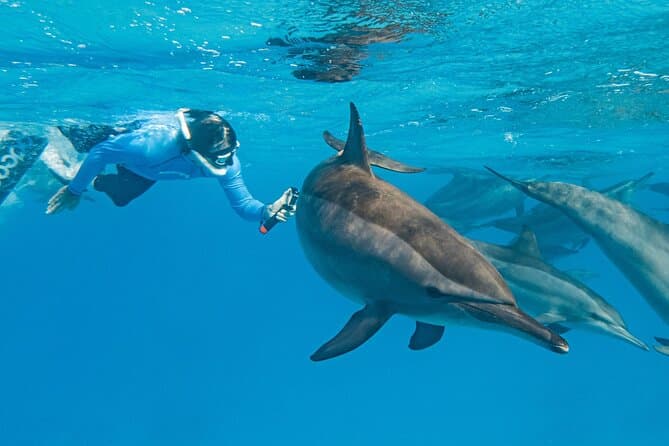
K tomu, abyste si den užili, podvodní fotoaparát nepotřebujete, a honba za snímkem je nejspolehlivější způsob, jak si ten okamžik nechat ujít.
Pokud si nějaký vezmete, plovoucí poutko na zápěstí má větší cenu než fotoaparát. Co spadne do otevřené vody, je pryč. Levné poutko zachránilo víc telefonů a GoPro než cokoli jiného, co na palubě vídáme.
Žádný blesk poblíž zvířat. V chráněných lokalitách je to zakázáno a zvířata to poleká. Přirozené světlo v mělčinách Rudého moře je i tak vynikající.
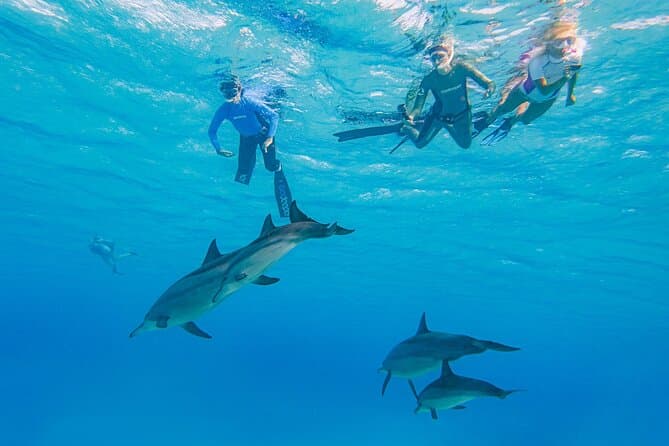
Stojí za to říct to na rovinu: hosté, kteří stráví setkání pohledem přes displej, soustavně uvádějí, že si ho užili méně. Delfíni proplují za pár minut. Dívejte se na ně.
Co nechat doma
Běžný opalovací krém — jak je uvedeno výše, poškozuje korály a mnoho provozovatelů vás požádá, abyste ho nepoužívali.
Cennosti a šperky. Na malé lodi není žádné bezpečné místo a prstýnky sklouzávají ze studených prstů ve slané vodě snáz, než byste si mysleli.
Velké tašky a pevné kufry. Prostor na palubě je společný.
Vlastní jídlo, pokud nemáte dietní požadavek — v tom případě nám to řekněte při rezervaci a vyřešíme to my, místo abyste si nosili krabičku.
Sezónu po sezóně
Základní seznam se příliš nemění, ale dvě věci ano.
Léto (červen–září): voda kolem 28–30 °C, neopren není potřeba. Zdvojnásobte ochranu proti slunci — právě tehdy se lidé spálí. Litr vody navíc a klobouk, který si ve větru udržíte na hlavě, mají větší cenu než cokoli jiného.
Zima (prosinec–březen): voda kolem 22–24 °C. Naprosto se dá plavat, ale pokud vám bývá zima, krátký neopren udělá dlouhý den mnohem pohodlnějším. Vezměte si teplejší vrstvu na cestu lodí zpět — právě tehdy zpáteční cesta opravdu koušе.
Často kladené otázky
Musím si do Marsa Alam vzít vlastní šnorchlovací vybavení?
Ne. Maska, šnorchl, ploutve a záchranná vesta jsou v ceně a přizpůsobí se na palubě. Jediné, co se vyplatí vzít, je vlastní maska, pokud máte takovou, která vám dobře sedí, protože právě padnutí rozhoduje o tom, zda těsní.
Jaký opalovací krém mám v Egyptě na šnorchlování používat?
Minerální, k útesům šetrný SPF 50 na bázi oxidu zinečnatého nebo titaničitého. Běžné krémy obsahující oxybenzon nebo oktinoxát poškozují korály a v chráněných lokalitách jako Samadai se nedoporučují. Pokud můžete, kupte si ho před cestou.
Mám si vzít lycrové triko, nebo stačí krém?
Lycrové triko s dlouhým rukávem je účinnější než krém a není třeba ho znovu nanášet. Trávíte hodiny obličejem dolů s odhalenými zády, a přesně tam se lidé spálí. Pokud si nad rámec základů vezmete jedinou věc, ať je to tohle.
Je na výletě lodí zahrnut oběd?
Ano. Bufetový oběd, voda, čaj a nealkoholické nápoje jsou zahrnuty na všech našich celodenních výletech, spolu se svozem z hotelu a zpět. Jídlo si brát nemusíte, pokud nemáte konkrétní dietní požadavek — řekněte nám to při rezervaci.
Kolik hotovosti si mám vzít?
Menší částku v bankovkách nízkých hodnot na spropitné posádce a případné příplatky, jako je zapůjčení podvodního fotoaparátu. Na palubě se nedá platit kartou, takže si vezměte hotovost místo spoléhání na kartu.
Co když mi bude špatně z moře?
Vezměte si tablety proti kinetóze ještě před odjezdem z hotelu, nikoli až když se budete cítit špatně — potřebují 30–60 minut, aby zabraly. Na palubě zůstaňte na čerstvém vzduchu a sledujte obzor. Pokud vás přeplavba znepokojuje, výlet k Abu Dabbab využívá silniční transfer a vstup z pláže.
Potřebuji v Marsa Alam neopren?
V létě ne, kdy se voda pohybuje kolem 28–30 °C. Od prosince do března má voda zhruba 22–24 °C a krátký neopren udělá celý den výrazně pohodlnějším, pokud vám bývá zima.
Můžu si vzít na loď telefon?
Ano, ale mějte ho v nepromokavém vaku nebo uzavíratelném sáčku. Stříkající voda na palubě zničí víc telefonů než cokoli jiného. Pokud chcete fotky ve vodě, plovoucí poutko na zápěstí je důležitější než samotný fotoaparát.
Dolphin House, útes Samadai
Od €59 / dospělý · Přibližně 9 hodin