Practical guide
Is Snorkeling in Marsa Alam Safe?
· 9 min read · Lina Paoli, Marketing Manager
The short answer
For a typical guest on a guided boat day, snorkeling from Marsa Alam is a managed, ordinary risk — sunburn, dehydration, a grazed shin, an urchin spine, feeling queasy on the crossing. It is not a stunt. Life vests are included. Guides brief before you enter. You can sit a session out.
It is not risk-zero. Open water, boats, and wild reefs are still open water, boats, and wild reefs. If you cannot float with a vest without distress, this is the wrong activity, not a safety lecture you have failed. Start with first-time snorkeling and the gentler Abu Dabbab day if you need a ramp.
- Sun and salt fatigue ruin more days than anything in the water
- Do not stand on coral or reach into holes — urchins live there
- Tablets for the crossing before you leave the hotel
- Tell the guide about medical issues, panic, or first-time nerves on the quay
What we actually see go wrong
Sun. Face-down, back exposed, wind drying the cream off. A rash vest beats heroism. Reef-safe sunscreen on 30 minutes before the water, not on a wet chest at the first stop.
Urchins and coral. You are told not to touch coral and not to stand on it. That is not decoration. Urchins sit in the same places feet go when someone tries to 'just rest for a second'. A spine in the sole is a miserable taxi ride home.
Seasickness. Samadai’s crossing is about 45 minutes. Sataya adds a long drive. Feeling unwell is common and preventable if you medicate early. It is not a character test.
Fatigue. Two sessions exist because people are tired after one. Getting back on the boat is allowed. Staying in 'to get your money’s worth' is how cramp and panic start.
Boats, vests, and other people
You enter and exit a boat with fins in your hands or on your feet, depending on the skipper’s system. Listen once. Hold the line. The dangerous moment is not a shark — it is a ladder, a wave, and someone rushing.
A life vest is not an insult. It is how mixed groups share a lagoon. We would rather you wear it and look at fish than prove you can tread water while the guide watches two other first-timers.
Other boats at Samadai are part of a protected, popular site. Stay with your group. Do not swim off toward a second boat’s guests because you saw a fin.
Sharks, and other animals people ask about
The Red Sea has reef sharks. That is a real ecosystem, not a movie. On these day snorkel trips we do not treat shark injury as a normal, expected event, and we will not invent statistics to soothe or to frighten you. Give animals room. Do not dangle fish. Do not chase anything that is larger or faster than you.
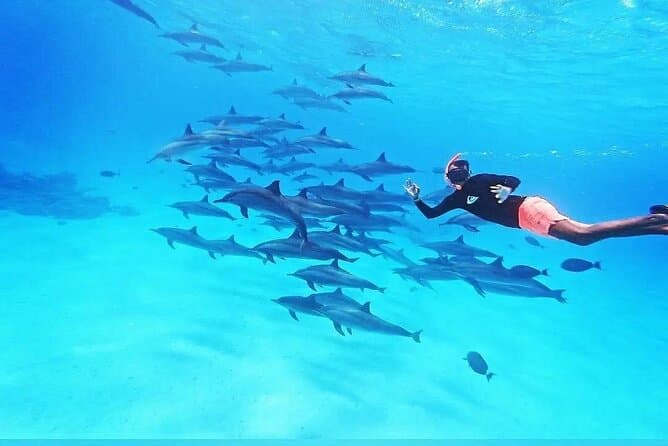
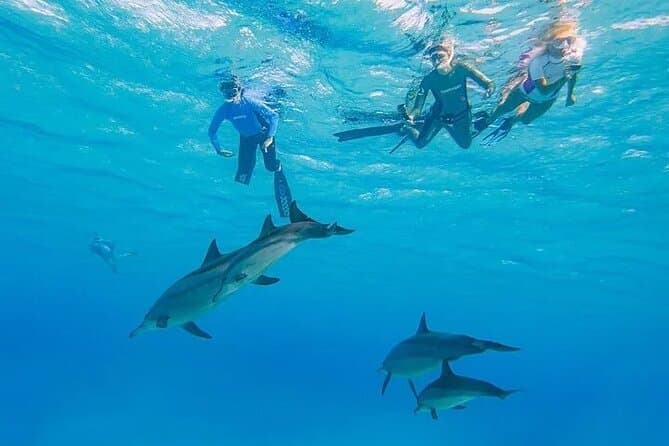
Dolphins, turtles and dugongs are the animals people came to see. They are also the animals people get too close to. Distance is safety for them and for you. Ethics at Samadai and dugong rules are the behaviour pieces.
Who should not get in
If you cannot keep your face in the water, if a vest still leaves you panicked out of your depth, or if a doctor has told you to avoid boats and exertion, stay on deck. The trip is still a day on the sea. You are not owed a snorkel at the cost of a medical incident.
Pregnancy, heart conditions, recent surgery, epilepsy, and serious ear or sinus problems are conversations for your doctor, not for a blog. We are not going to clear you in a paragraph.
Children: which trips work. Sataya’s length is the safety issue as much as the water. Infants sit on laps; the Samadai day is not wheelchair accessible.
Weather is a safety decision
Captains cancel or move days because of wind and sea state, not because they enjoy disappointing you. A rough crossing is how people get hurt. If the weather turns is what happens to the booking. Listen to that call. Arguing for 'we came all this way' is how boats take seas they should not.
Frequently asked questions
Is it safe to snorkel in Marsa Alam if I am not a strong swimmer?
If you can float calmly with a life vest, yes, on a guided trip. If being out of your depth is distressing, choose Abu Dabbab or skip the water.
Are there sharks?
Reef sharks exist in the Red Sea. We do not treat attacks as a routine part of these snorkel days, and we will not fake a percentage. Give wildlife space.
What about sea urchins?
They are the common injury. Do not stand on the reef or shove your hands into holes. Wear fins as briefed.
Do I have to snorkel both sessions?
No. Sit one out if you are tired, cold, or queasy. That is the safe choice.
Is the boat trip suitable if I get seasick?
Take medication before pickup. Samadai has a 45-minute crossing. Abu Dabbab has less time at sea. Sataya is a long day even before the boat.
Dugongs & Turtles, Abu Dabbab
From €60 / adult · 8 hours 30 minutes