Marine life
What Fish Will You See Snorkeling in Marsa Alam? A Species Guide
· 8 min read · Lina Paoli, Marketing Manager
The short answer
On almost any reef snorkel in Marsa Alam you will see parrotfish, butterflyfish, anthias, surgeonfish and anemonefish (the 'Nemo' clownfish). You do not need to dive. Most of these fish live in the top five to ten metres of the reef, which is exactly where a snorkeler floats.
What changes from day to day is not whether you see fish, but how many and how big. Clear water, calm wind and an early start all help. Our guide to Red Sea marine life covers the bigger animals; this page is about the fish at the reef edge.
- Near-certain: anthias swarms, butterflyfish, parrotfish, surgeonfish, damselfish
- Very likely: anemonefish in their anemones, Red Sea bannerfish, groupers, moray eels in crevices
- Possible: lionfish, crocodilefish, bluespotted ribbontail rays, napoleon wrasse
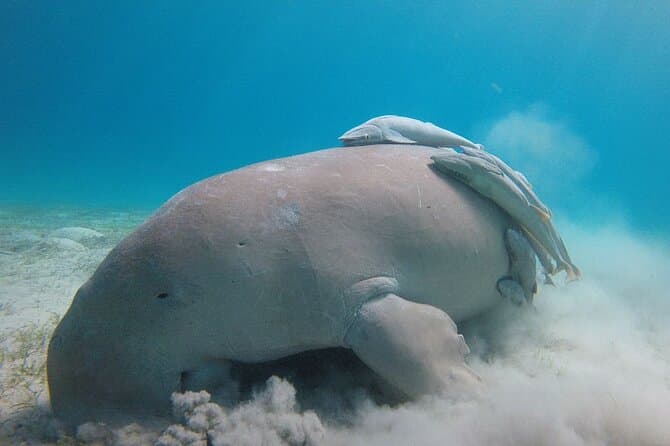
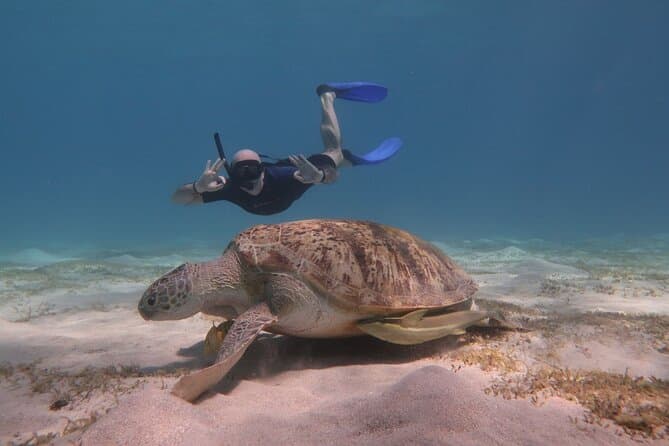
- Never guaranteed: turtles, dugongs, dolphins — see the trip pages for those
The fish you will see on almost every snorkel
Anthias are the orange-pink clouds hovering above coral heads. They feed on drifting plankton, so they sit in the current and dart into the coral the moment something large swims past. If a reef looks like it is full of tiny orange fish, that is anthias.
Butterflyfish and bannerfish travel in pairs and pick at coral polyps. The Red Sea bannerfish, with its long white trailing fin, is one of the easiest to recognise.
Parrotfish are the large, blunt-faced fish you can sometimes hear crunching coral. They graze algae and bite off bits of coral skeleton, which is why Red Sea beaches are made partly of parrotfish waste. Watch for green and blue males and duller females — they are the same species.
Surgeonfish, unicornfish and triggerfish cruise the reef slope in small groups. Triggerfish defend their nests and can be bad-tempered; give them space in the breeding season.
Anemonefish and the 'Nemo' spots
Anemonefish live inside sea anemones and rarely stray more than a metre from them. Look for anemones on the reef top, often in around two to six metres of water, and hold still for ten seconds. The fish will usually come back out.
Do not reach in to 'help' them. Touching an anemone strips the protective slime the fish depend on, and the fish can nip. A relaxed float above the anemone is the best photo position anyway.
The shy and the spiky: what to look for in the cracks
Moray eels sit with their mouths open. That is breathing, not aggression. Check ledges and holes in the reef; do not put a hand in any crevice.
Lionfish hover near coral overhangs with their fans spread. They are venomous and slow, which means you can watch them calmly from a metre or two away. Do not chase one for a closer photograph.
Crocodilefish and stonefish are camouflaged on the bottom. A stonefish is the most venomous fish on the reef and almost invisible. This is the strongest reason to wear fins or reef shoes and never stand on the reef at the shore or in shallow water.
Bluespotted ribbontail rays rest on sandy patches beside the coral. They are shy and will flick away if you drift over them closely.
Where to see the most fish
A healthy reef slope beats a sandy shelf every time. Fish density follows the coral. A good house reef will put a drop-off within 20–30 metres of the shore. On a boat day, the reef stops are chosen for exactly that structure.
On the Abu Dabbab day you get a seagrass bay and a turtle reef in one trip; the reef stop is where most of the fish species above are easiest to find. What to expect on the boat day explains the order of the stops.
Go early. Fish are most active in the first hours after sunrise and again late in the day, and in the morning the water is usually calmer and clearer.
Rules that keep the reef alive
Do not touch, stand on or feed anything. Feeding changes fish behaviour and brings aggressive species to swimmers. Use reef-safe sunscreen or a rash vest, and do not collect shells or coral.
A short briefing before every snorkel covers the reef rules for that stop. If you are new to all of this, your first time in the Red Sea is the place to start.
Frequently asked questions
What fish can you see snorkeling in Marsa Alam?
Anthias, butterflyfish, parrotfish, surgeonfish and anemonefish are seen on almost every reef snorkel. Moray eels, lionfish and rays are common but need a closer look at the reef edge.
Do I need to dive to see Red Sea fish?
No. Most reef fish live in the top five to ten metres, which is the zone a snorkeler covers. A mask and a calm float are enough.
Are there dangerous fish in the Red Sea?
A few, such as stonefish, lionfish and triggerfish, can hurt you if you touch or corner them. Staying horizontal, not standing on the reef and keeping your hands to yourself removes almost all the risk.
What is the best time of day to see fish?
Morning, when the water is calmest and the reef is most active. Boat trips leave early for that reason.
Is the Red Sea good for beginners to see fish?
Yes. The fish are close to the surface and the water is clear. Tell your guide it is your first time and start at a sheltered reef stop.
Dugongs & Turtles, Abu Dabbab
From €60 / adult · 8 hours 30 minutes